 Careers
 Contact
Platinum Group Metal (PGM) Oxide Coatings
Expanding PGM oxide coating options for neurostimulation electrode design
As part of Pulse Technologies’ ongoing exploration of advanced surface engineering materials and technologies, additional platinum group metal oxides are being evaluated for their potential in next generation neurostimulation electrodes.

Expanding Beyond Iridium Oxide
As neurostimulation devices continue to evolve, electrode and microelectrode array designs must support further miniaturization without sacrificing charge exchange performance at the electrode-tissue interface.
Iridium oxide remains a well-established coating in this space, but continued refinement of neural interfaces drives interest in additional oxide systems that can deliver similar electrochemical performance while expanding material and design options.
Ruthenium oxide, rhodium oxide, and palladium oxide systems extend that conversation, offering additional paths for optimizing neurostimulation electrodes.
Microstructure and Process Control
Performance cannot be separated from microstructure and process control.
Reactively sputtered ruthenium oxide, rhodium oxide, and palladium oxide function as tunable systems whose electrochemical behavior depends on deposition conditions, composition, thickness, and resulting morphology.
Controlling microstructural evolution improves charge exchange behavior.
Reactive Sputtering as a Tuning Platform
Reactive sputtering enables precise control of morphology, porosity, and electrochemical behavior in PGM oxide thin films. Pulsed-DC and DC reactive magnetron sputtering provide routes for synthesizing these materials under defined oxygen partial pressure and working pressure conditions.
Our studies have positioned these coatings as engineered candidates for neural interfacing applications rather than purely academic comparisons.
Implications for OEM Electrode Design
For OEM teams developing neurostimulation electrodes, these tunable oxide systems expand the design space for next-generation interfaces.
PGM oxide thin films emerge as viable coating options for neural interfacing applications.
These materials are candidates for continued evaluation, not finished solutions, and their reported behavior depends on defined thickness and deposition conditions. They complement Pulse’s broader surface engineering platform by extending material options for future neurostimulation electrodes and supporting ongoing innovation across implantable technology development.
Interested in exploring advanced PGM oxide coatings for your neurostimulation interfaces?
Let’s connect to discuss how these tunable systems could support your design goals.
Recent News & Blogs on HSR™

Femtosecond laser hierarchical surface restructuring for next generation neural interfacing electrodes and microelectrode arrays
Shahram Amini, Wesley Seche, Nicholas May, Hongbin Choi, Pouya Tavousi & Sina Shahbazmohamadi Long-term implantable neural interfacing devices are able to diagnose, monitor, and treat many cardiac, neurological, retinal and hearing disorders through nerve...
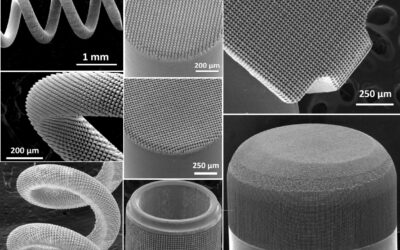
Pulse Technologies Announces Successful Biocompatibility Results For Novel HSR™ Platinum-Iridium Electrode Surface Treatment Technology
Biocompatibility studies were conducted by an independent, certified lab based in the US in accordance with FDA and ISO standards.
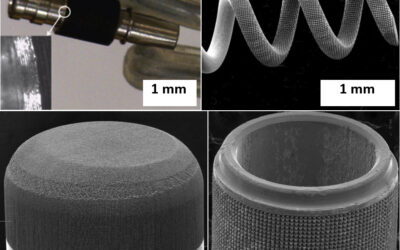
Surface Treatment Technology Using Ultrashort Pulse Lasers Could Help Treat Heart Failure
Hierarchical Surface Restructuring technology can be used to enhance charge storage capacity, increase specific capacitance, & decrease impedance of electrodes & microelectrodes.
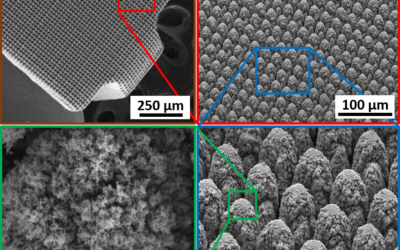
Pulse Technologies’ Electrode Surface Treatment Chosen for Cardiac Device
Pulse Technologies’ HSR™ electrode surface treatment is now part of Cardionomic’s Cardiac Pulmonary Nerve Stimulation (CPNS) System for treating heart failure.
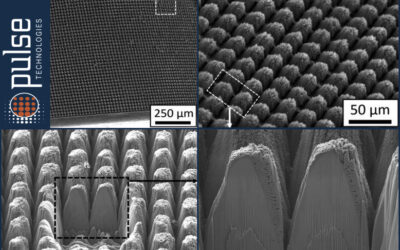
Hierarchically Restructured Titanium Electrodes: A Novel, Low-Cost, High-Performing Platform for Leadless Pacemakers
Pulse’s hierarchical titanium surface restructuring is well-suited for enhancing titanium electrodes of leadless pacemakers.
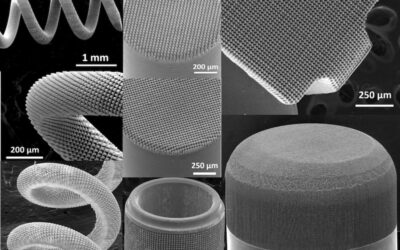
How Pulse’s Newly Patented Hierarchical Surface Restructuring (HSR™) Technology Improves Electrode Performance in Implantable and Diagnostic Medical Devices
This blog post outlines how Pulse’s patented HSR™ technology can enhance the electrochemical performance of electrodes and microelectrode arrays via enhancements in their surface topology and surface characteristics.

Video Explains the Benefits of Hierarchical Surface Restructuring
This video, Hierarchical Surface Restructuring for Electrodes And Microelectrode Arrays, will introduce you to a unique technology that uses lasers to rearrange the molecular surface of electrode materials and promises to enhance the performance of next-generation sensing, recording and stimulating devices.

Pulse Technologies, Inc.
2000 AM Drive, Quakertown, PA 18951
 P: 267-733-0200
F: 267-733-0201


Contract Manufacturing
Advanced Technology
Capabilities
About Us



© 2026 Pulse Technologies, Inc. All rights reserved.