 Careers
 Contact
Antibacterial-HSR™ Electrodes
Antibacterial-HSR™
Electrochemical Performance Extended to Infection Control
Implantable electrodes are expected to do more than deliver strong electrochemical performance.
They must also operate reliably within the complex biological environment of the body during long-term implantation, where infection remains one of the most serious risks associated with implantable medical devices.
Once bacteria attach to the surface of an implant and begin forming biofilms, they become significantly more difficult to eliminate. These persistent bacterial communities can compromise device performance, increase the risk of infection-related complications, and may ultimately require device revision or removal.
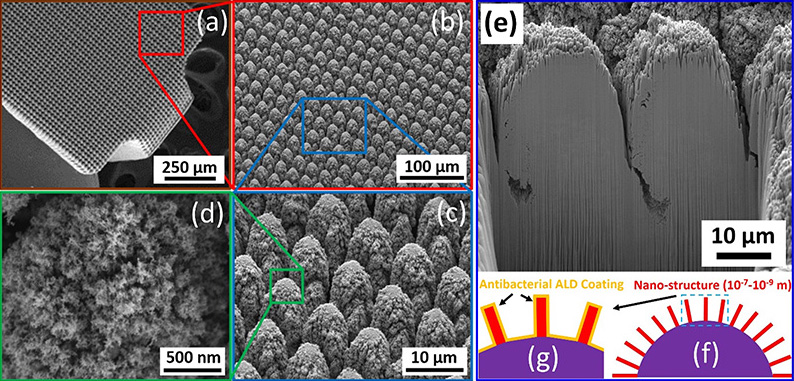
At the same time, the materials commonly used in implantable neural and cardiac electrodes were selected primarily for their electrochemical properties rather than for antimicrobial functionality. Materials such as Pt-10%Ir, and surface coatings such as TiN, and IrO₂ provide excellent performance for sensing, recording, and stimulation, but they do not inherently address infection risk. Conventional antibacterial coatings may offer some protection; however, they can introduce new challenges by masking or altering the high-surface-area electrode architectures that are essential for achieving strong electrochemical performance.
This creates a fundamental tradeoff in electrode design. Strategies that improve infection resistance can compromise electrochemical performance, while materials optimized for electrochemical function leave infection risk unaddressed.
Antibacterial-HSR™ was developed to bridge this gap by integrating antibacterial functionality with a high-performance electrochemical electrode architecture.
Proven Surface.
Added Function.
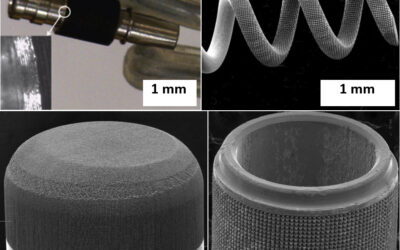
Antibacterial-HSR™ builds on the high-performance HSR™ electrode architecture by integrating antibacterial functionality while preserving its electrochemical foundation.
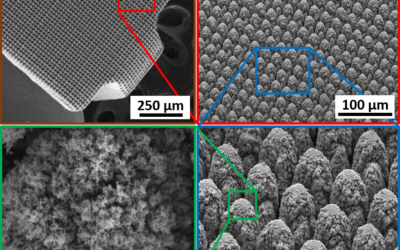
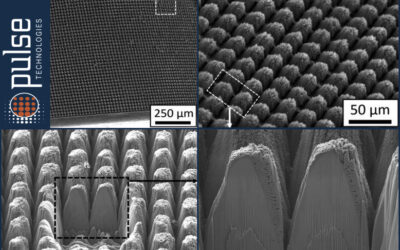
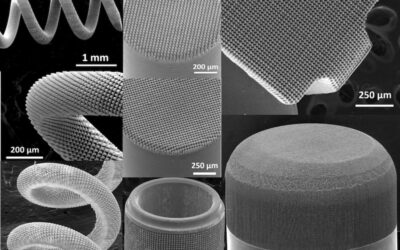
The platform follows a modular two-step strategy. First, the electrode surface is restructured using HSR™ processing to generate the hierarchical surface architecture responsible for enhanced electrochemical performance. Second, a thin antibacterial metal oxide layer is deposited onto this restructured surface to introduce antibacterial functionality at the electrode–tissue interface.
This approach preserves the underlying electrode architecture rather than relying on a single coating to deliver multiple functions. The hierarchical HSR™ surface remains responsible for the enhanced electrochemical performance of the electrode, while the metal oxide layer introduces a second function—antibacterial activity at the electrode–tissue interface.
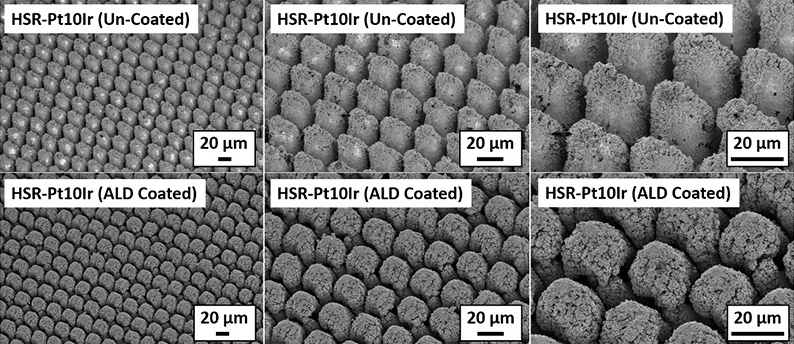
Two antibacterial metal oxide systems have been investigated: copper oxide (CuO) and zinc oxide (ZnO). These oxides can be deposited onto the hierarchical HSR™ surface using a range of thin-film deposition techniques, including atomic layer deposition (ALD) and physical vapor deposition (PVD). These processing approaches enable controlled formation of antibacterial metal oxide layers while preserving the underlying hierarchical electrode architecture.
Together, these studies demonstrate that antibacterial functionality can be integrated into the HSR™ electrode platform through multiple material and processing pathways.
Validated by Electrochemistry and Antibacterial Response
A critical question is whether antibacterial functionality can be introduced without compromising the electrochemical advantages of the HSR™ surface.
Experimental studies across multiple oxide systems demonstrate that this is achievable.
Copper Oxide (CuO) Studies
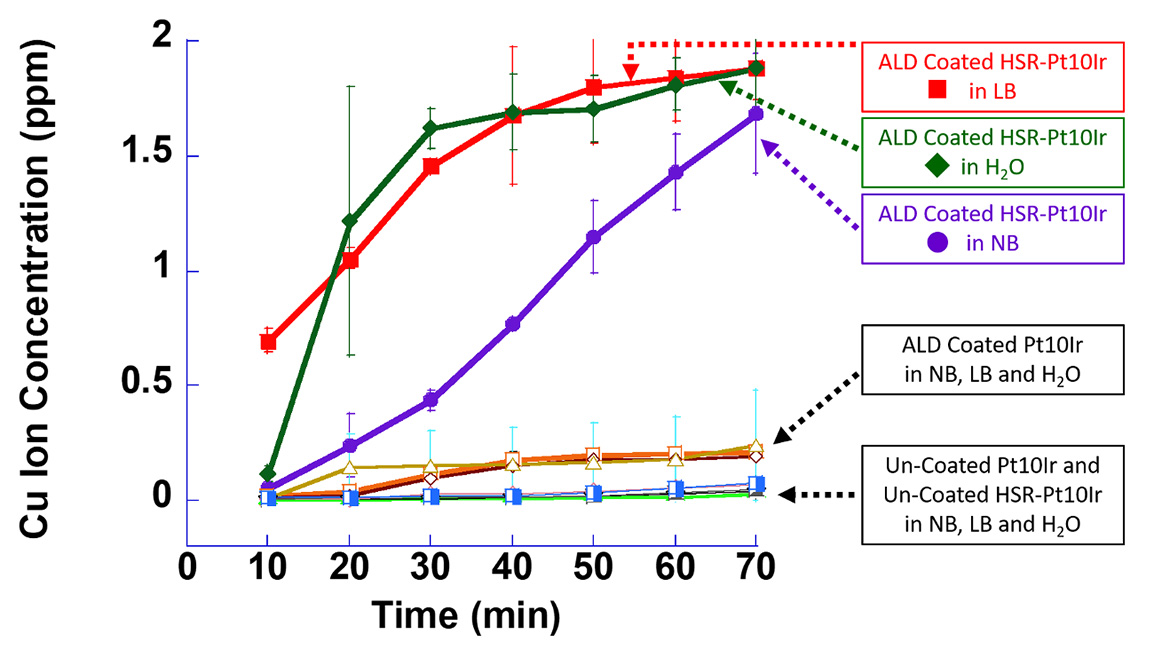
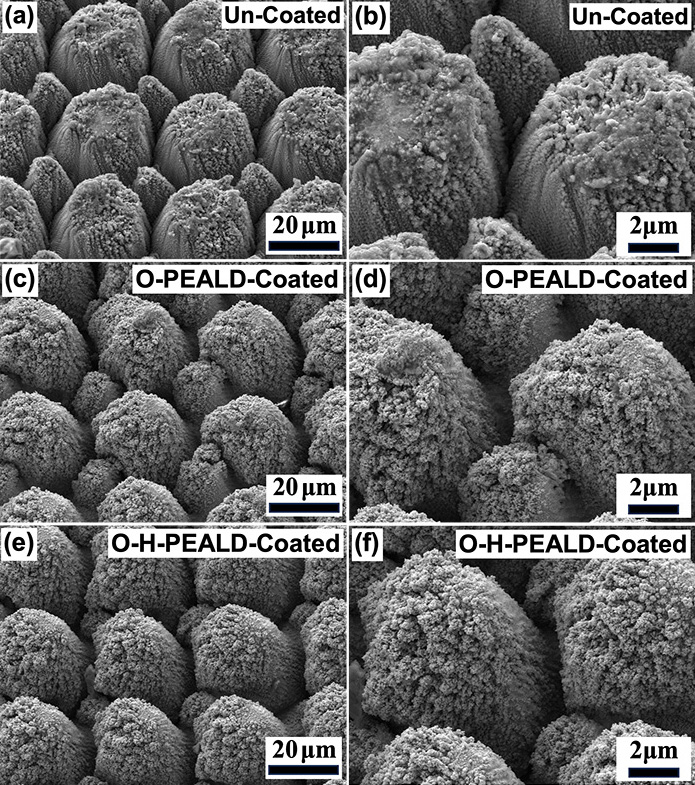
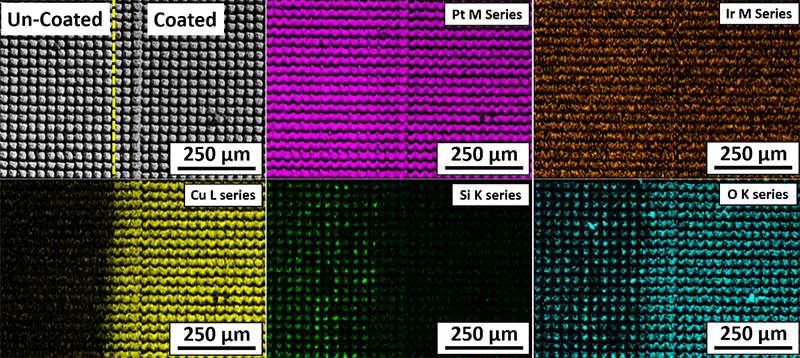
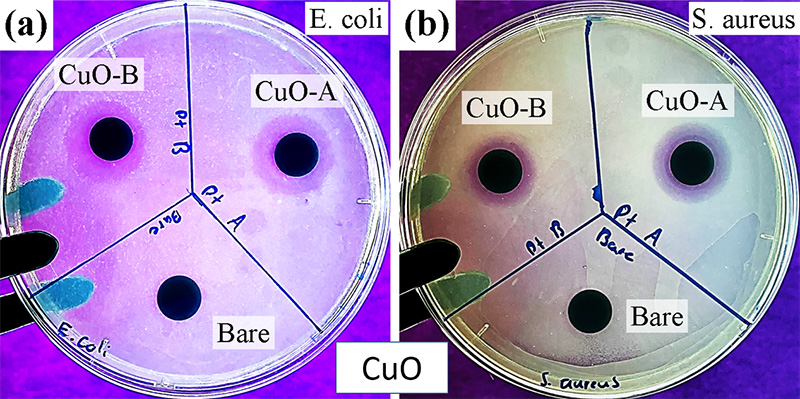
In studies involving copper oxide (CuO), the antibacterial coating preserved the underlying hierarchical HSR™ structure and had minimal impact on electrochemical behavior.
Electrochemical measurements showed a slight increase in charge storage capacity, while antibacterial activity was demonstrated against both E. coli and S. aureus. Additional analytical characterization confirmed the presence of crystalline CuO across the treated surface, verifying successful formation of the antibacterial oxide layer.
Zinc Oxide (ZnO) Studies
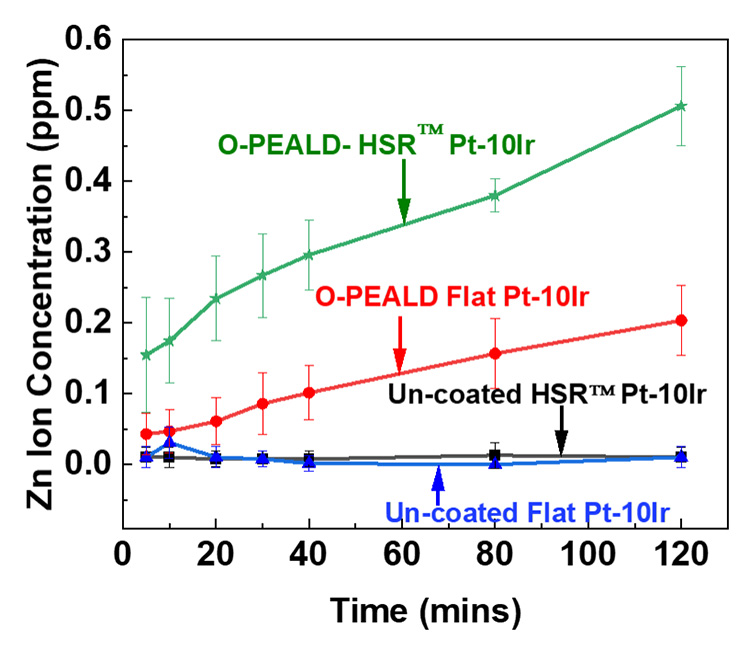
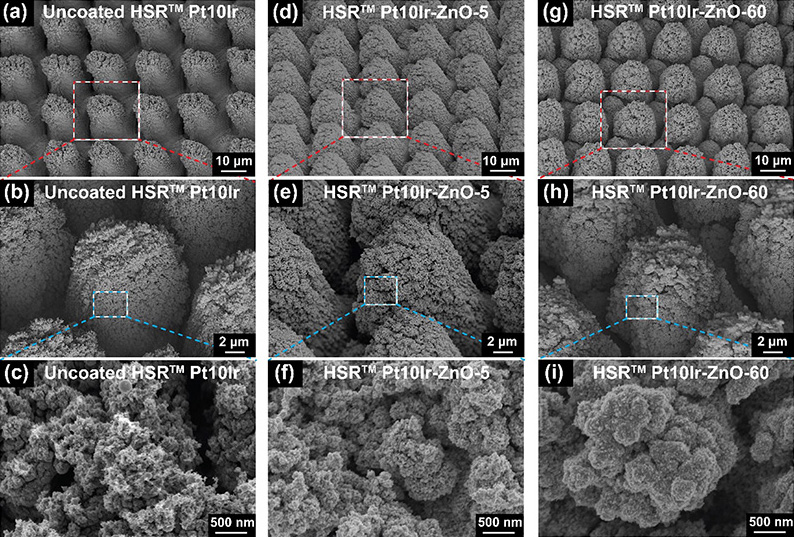
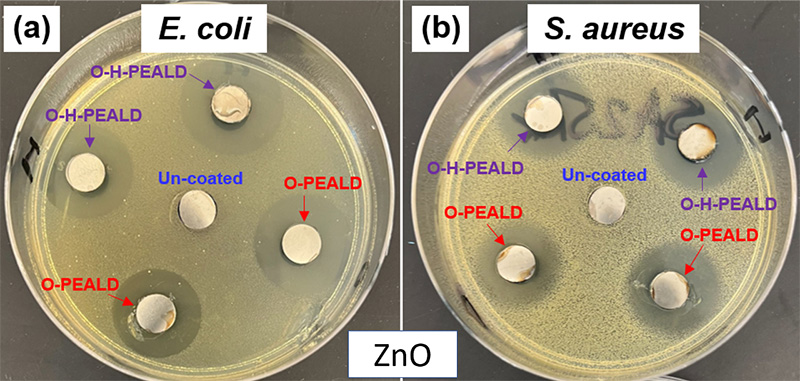
In studies involving zinc oxide (ZnO), coated electrodes retained their capacitive electrochemical behavior and exhibited increased specific capacitance compared with uncoated HSR™ electrodes.
Antibacterial activity was also demonstrated under dark conditions relevant to implanted-device environments. These results suggest that ZnO coatings can introduce antibacterial functionality while maintaining—and in some cases enhancing—the effective electrochemical behavior of the underlying hierarchical surface.
Together, these results demonstrate that antibacterial functionality can be integrated into the HSR™ electrode architecture while preserving, and in some cases enhancing, the electrochemical performance of the electrode.
Built for OEM Integration
For OEM partners and device manufacturers, Antibacterial-HSR™ offers a dual-function electrode platform that addresses two critical design objectives simultaneously: high electrochemical performance and antibacterial functionality at the implant interface.
It also offers significant process flexibility. Antibacterial metal oxide layers can be deposited using a range of thin-film techniques, including atomic layer deposition (ALD) and physical vapor deposition (PVD). These approaches enable precise control over coating thickness and morphology while allowing uniform coverage across complex electrode geometries. This flexibility provides engineering teams with multiple pathways to align material selection, processing methods, and manufacturing strategies with device performance and integration requirements.

For OEM teams, this means:
Flexible integration pathways that can align with existing manufacturing processes.
Reduced development risk through continuity with the established HSR™ electrode architecture.
The ability to combine antibacterial functionality with high electrochemical performance within a single electrode platform.
Most importantly, Antibacterial-HSR™ represents a natural extension of the broader HSR™ surface technology platform rather than a departure from it.
By building on a proven hierarchical surface architecture, the platform preserves design continuity while enabling the integration of additional functionality at the electrode–tissue interface.
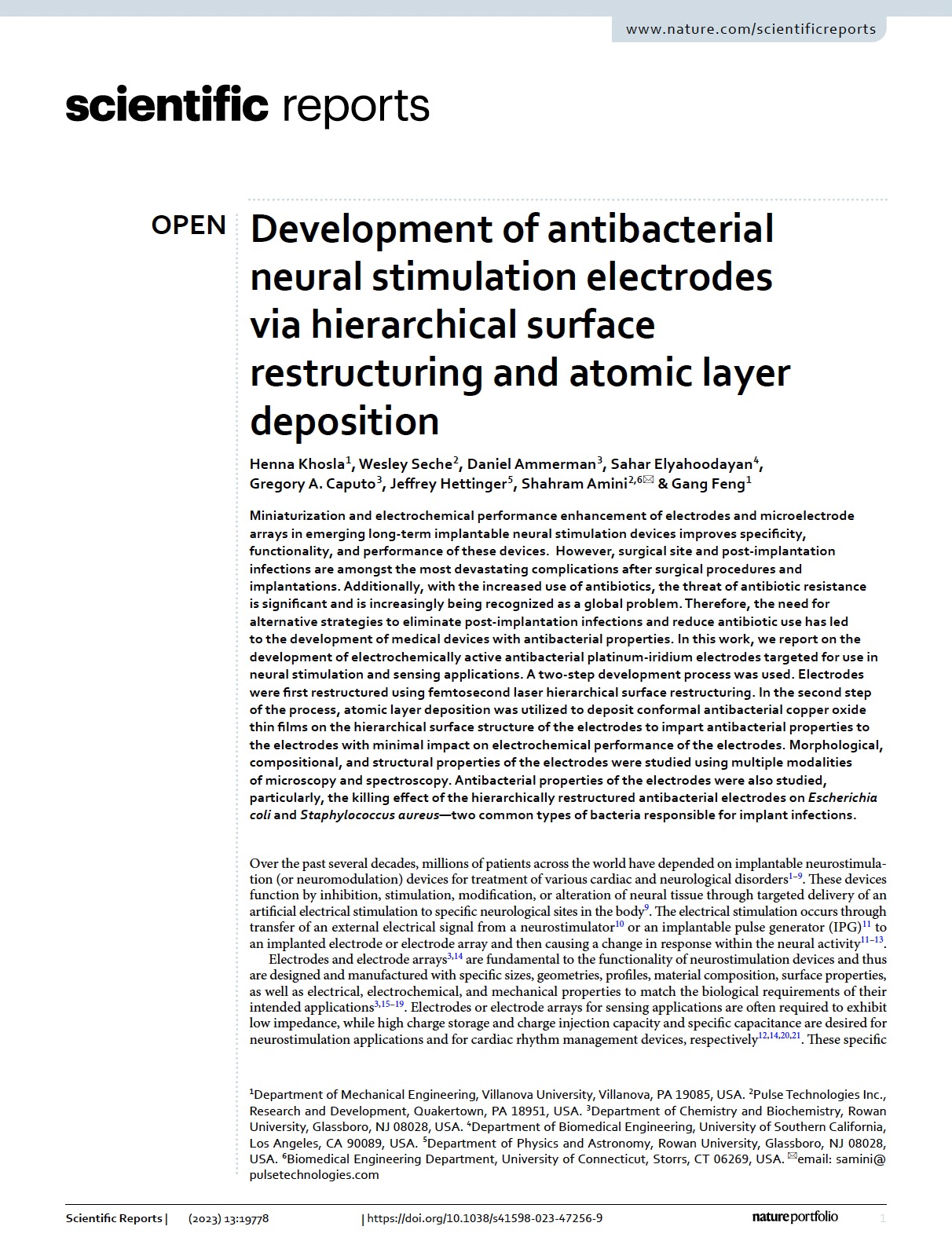
Development of antibacterial neural stimulation electrodes
via hierarchical surface restructuring and atomic layer deposition
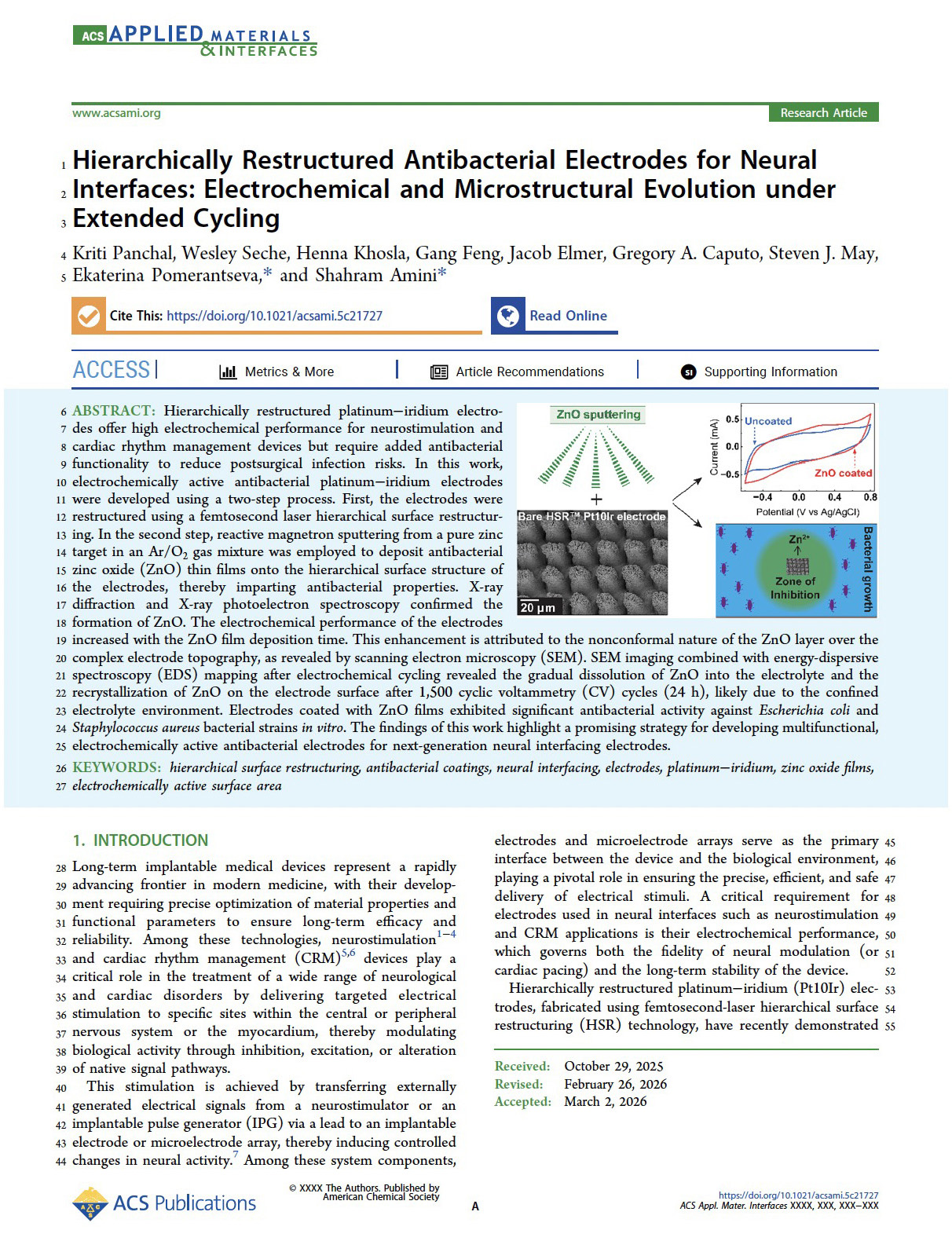
Hierarchically Restructured Antibacterial Electrodes for Neural 2 Interfaces:
Electrochemical and Microstructural Evolution under 3 Extended Cycling
Ready to bring infection control into the performance conversation without compromise?
Recent News & Blogs on HSR™

Femtosecond laser hierarchical surface restructuring for next generation neural interfacing electrodes and microelectrode arrays
Shahram Amini, Wesley Seche, Nicholas May, Hongbin Choi, Pouya Tavousi & Sina Shahbazmohamadi Long-term implantable neural interfacing devices are able to diagnose, monitor, and treat many cardiac, neurological, retinal and hearing disorders through nerve...
Pulse Technologies Announces Successful Biocompatibility Results For Novel HSR™ Platinum-Iridium Electrode Surface Treatment Technology
Biocompatibility studies were conducted by an independent, certified lab based in the US in accordance with FDA and ISO standards.
Surface Treatment Technology Using Ultrashort Pulse Lasers Could Help Treat Heart Failure
Hierarchical Surface Restructuring technology can be used to enhance charge storage capacity, increase specific capacitance, & decrease impedance of electrodes & microelectrodes.
Pulse Technologies’ Electrode Surface Treatment Chosen for Cardiac Device
Pulse Technologies’ HSR™ electrode surface treatment is now part of Cardionomic’s Cardiac Pulmonary Nerve Stimulation (CPNS) System for treating heart failure.
Hierarchically Restructured Titanium Electrodes: A Novel, Low-Cost, High-Performing Platform for Leadless Pacemakers
Pulse’s hierarchical titanium surface restructuring is well-suited for enhancing titanium electrodes of leadless pacemakers.
How Pulse’s Newly Patented Hierarchical Surface Restructuring (HSR™) Technology Improves Electrode Performance in Implantable and Diagnostic Medical Devices
This blog post outlines how Pulse’s patented HSR™ technology can enhance the electrochemical performance of electrodes and microelectrode arrays via enhancements in their surface topology and surface characteristics.

Video Explains the Benefits of Hierarchical Surface Restructuring
This video, Hierarchical Surface Restructuring for Electrodes And Microelectrode Arrays, will introduce you to a unique technology that uses lasers to rearrange the molecular surface of electrode materials and promises to enhance the performance of next-generation sensing, recording and stimulating devices.

Pulse Technologies, Inc.
2000 AM Drive, Quakertown, PA 18951
 P: 267-733-0200
F: 267-733-0201


Contract Manufacturing
Advanced Technology
Capabilities
About Us



© 2026 Pulse Technologies, Inc. All rights reserved.